
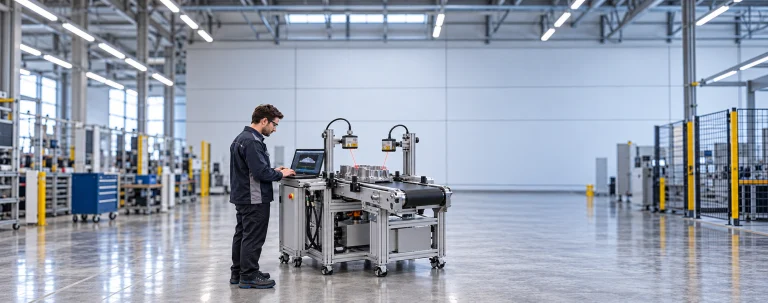










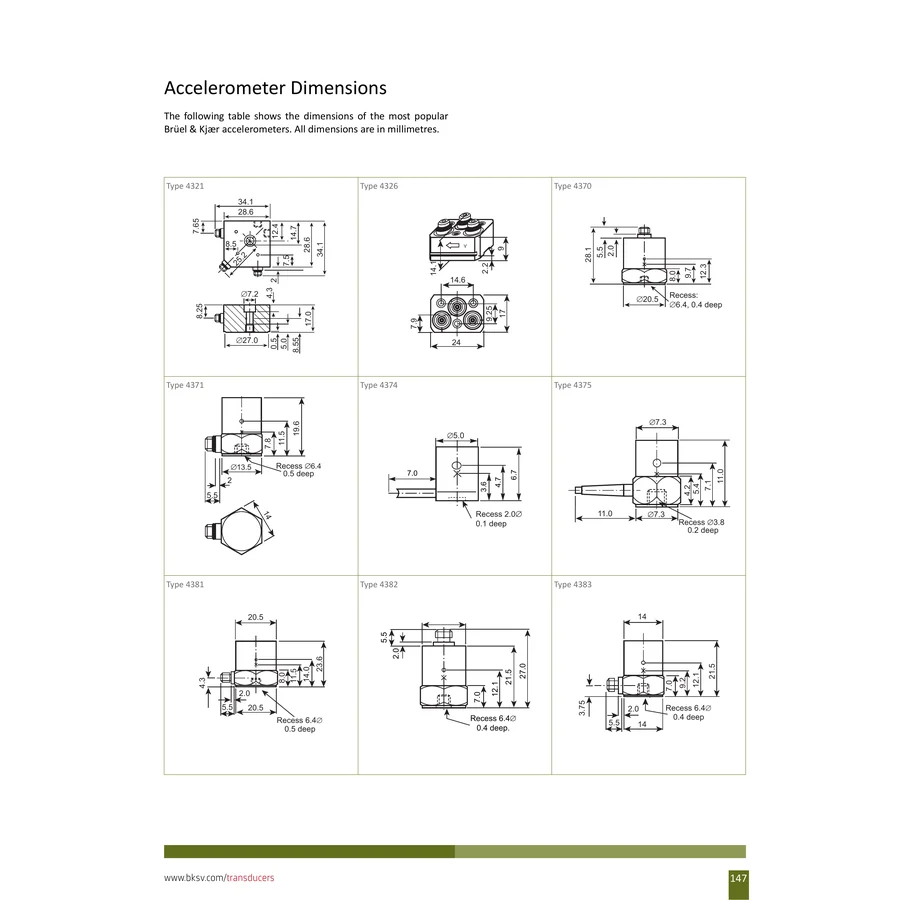
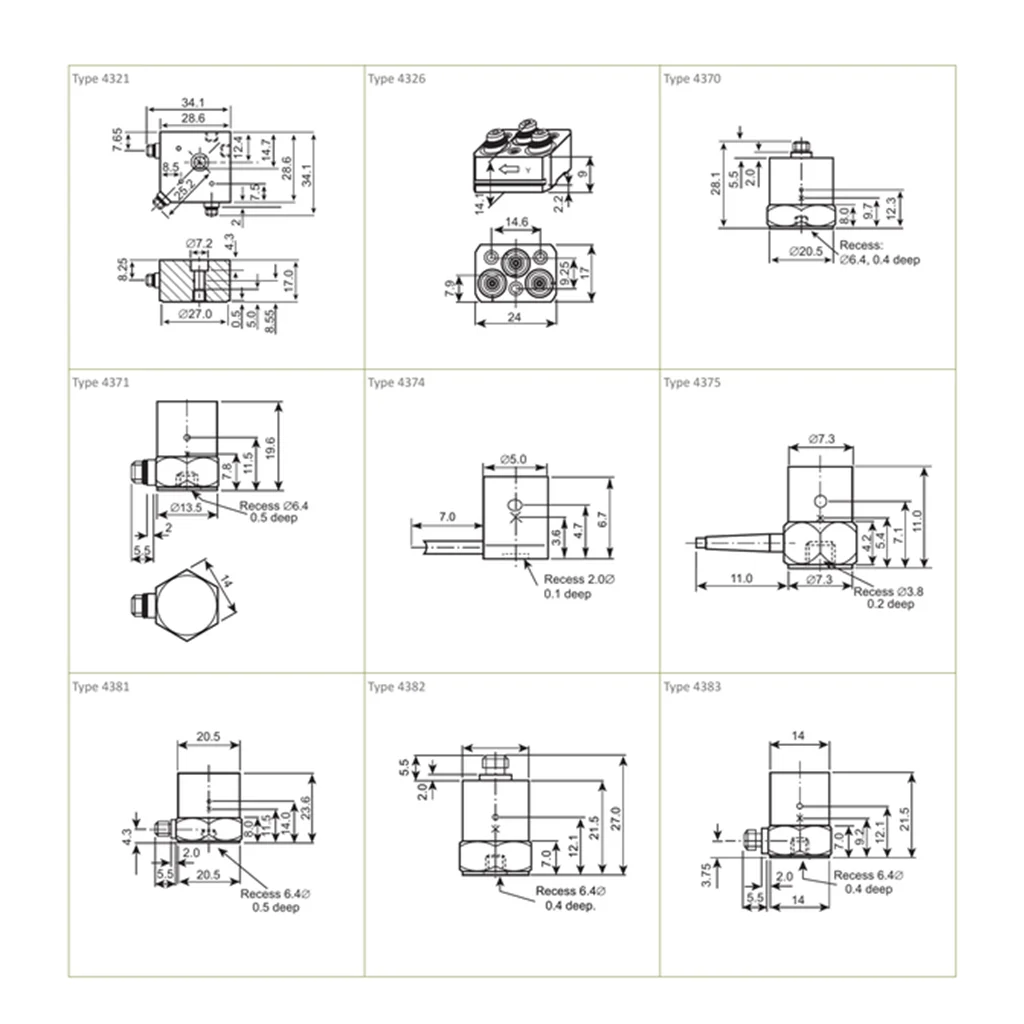
TYPE 4382
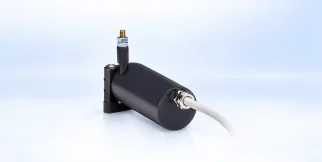
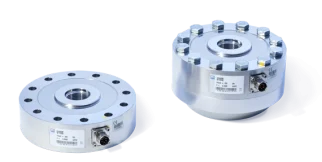
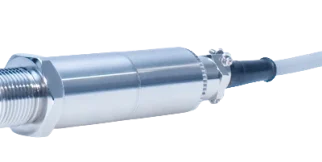
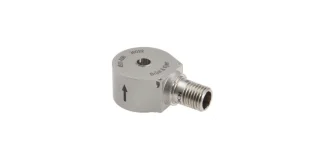
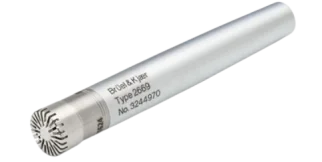
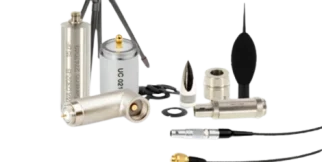
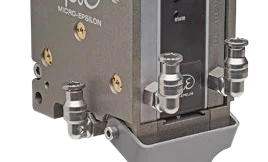
Type 4382 is suited to vibration testing, including low-level and low-frequency measurements. Its top connector lets the cable leave along the body axis. The sensor requires a charge input or converter configured using the unit’s calibration.
Visit the HBK site (opens in a new tab)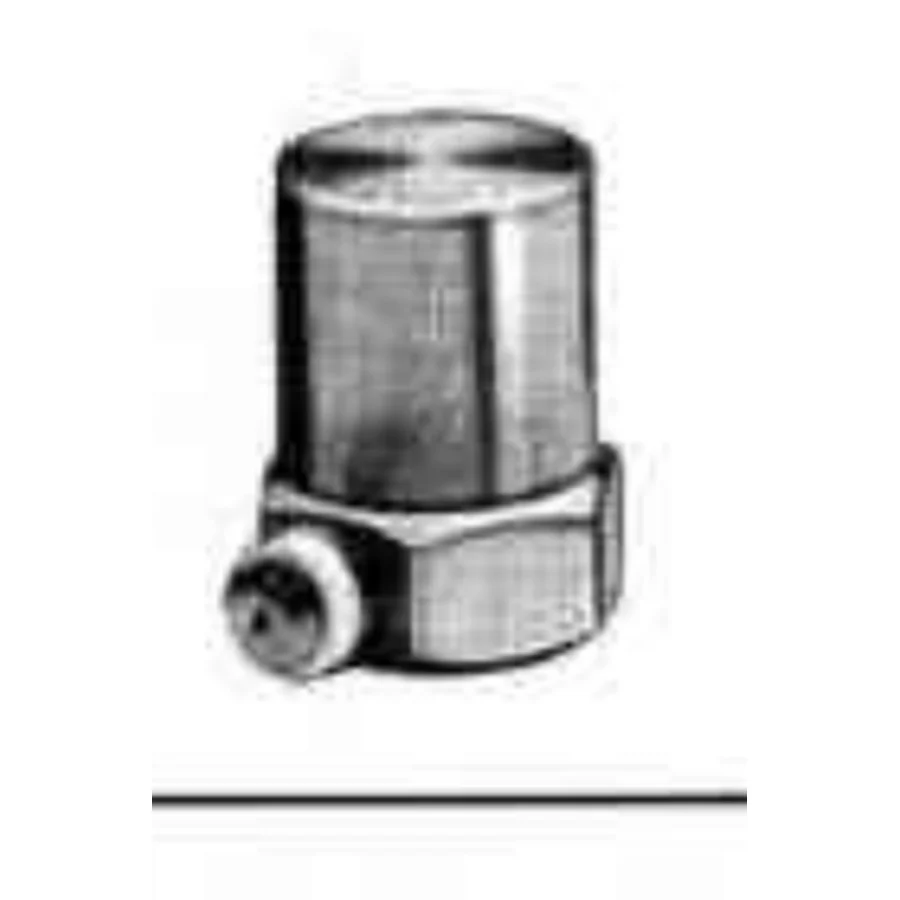
Models in the series
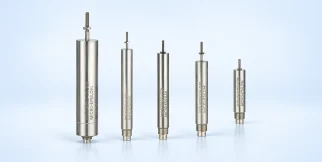
One column per model: what differs between the models of the series.
| Parameter | -4382— -4382--- | -4382-V– -4382-V-- |
|---|---|---|
| Operating temperature | -74–288 °C | -74–288 °C |
| Technical specification details | ±2000 g indexed capacity; Uniaxial; General purpose; Stud mounting | ±2000 g indexed capacity; Uniaxial; General purpose; Stud mounting |
| Number of axes | 1 | 1 |
| Number of measurement channels | 1 | 1 |
| Frequency response | 0–10 kHz | 0–10 kHz |
| Acceleration sensitivity | 31 mV/g | 31 mV/g |
| Outputs and interfaces | Unknown | Unknown |
| Status | Active | Active |
The industries we serve
-
-
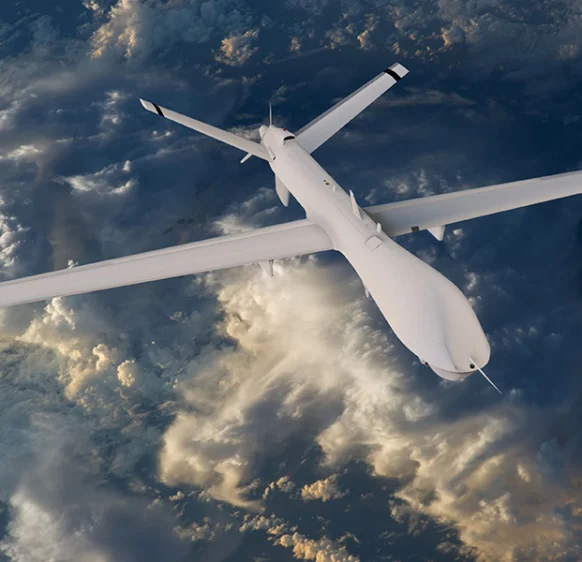
Aerospace
- Aircraft door-lock position detection
- Airlines & Aerospace Our balancing machines and moment weighing scales for aerospace drives ensure maximum precision, ease of use, and modular flexibility delivering reliability and performance without compromise contributing to your economic success.
- Automatic balancing machines Automatic balancing machines from Schenck are advanced solutions for precise balancing of rotating components in automated production processes. We offer systems and stations for balancing crankshafts, wheels and tires, turbochargers, electric armatures, drives, axle drive units, torque converters, drive shafts, disc-shaped rotors, as well as fans. Our systems increase productivity, ensure consistent quality, and are tailored to the needs of the automotive, energy, and industrial sectors.
-
Medical industry
-
Environment
-
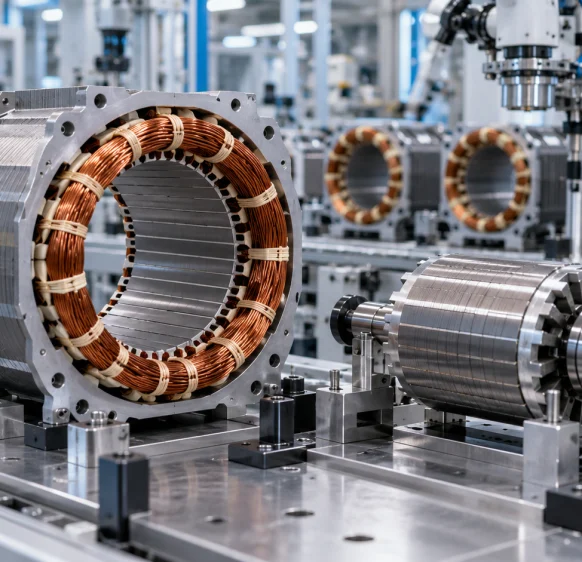
Electric motor manufacturing
-
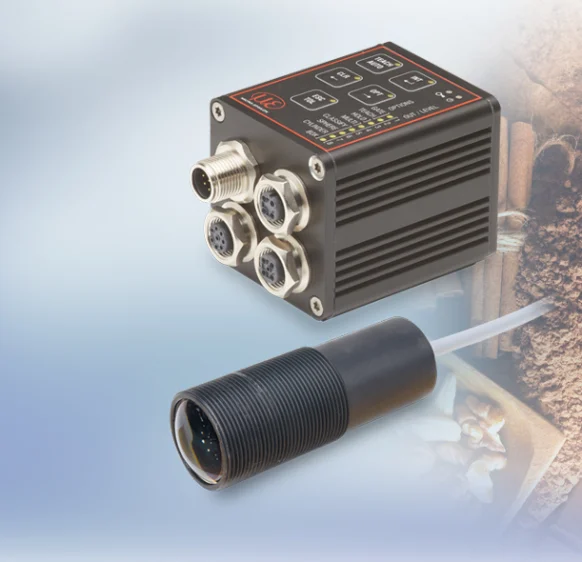
Food industry
-
Automotive industry
- Airlines & Aerospace Our balancing machines and moment weighing scales for aerospace drives ensure maximum precision, ease of use, and modular flexibility delivering reliability and performance without compromise contributing to your economic success.
- Automatic balancing machines Automatic balancing machines from Schenck are advanced solutions for precise balancing of rotating components in automated production processes. We offer systems and stations for balancing crankshafts, wheels and tires, turbochargers, electric armatures, drives, axle drive units, torque converters, drive shafts, disc-shaped rotors, as well as fans. Our systems increase productivity, ensure consistent quality, and are tailored to the needs of the automotive, energy, and industrial sectors.
- Axle Drives With our balancing machines for front and rear axle transmissions, the measured unbalance is corrected by drilling into the drive flanges of the transmissions (welding optional). We support you with our interdisciplinary expertise in the production of front and rear axle transmissions from the initial idea to the design stage through to series production.
-
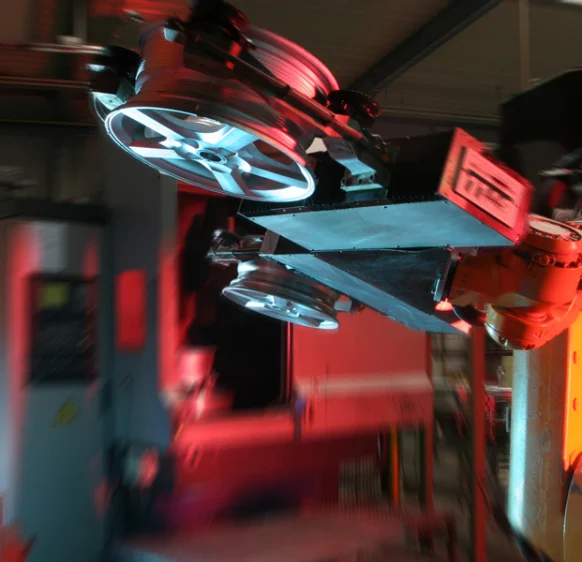
Industrial automation
-
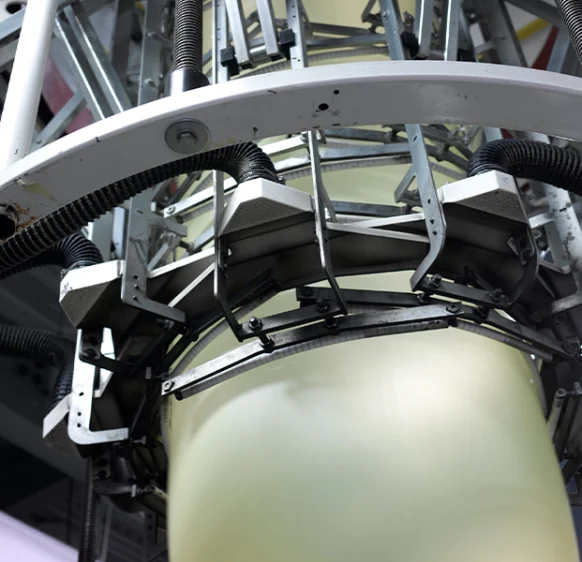
Plastics
-
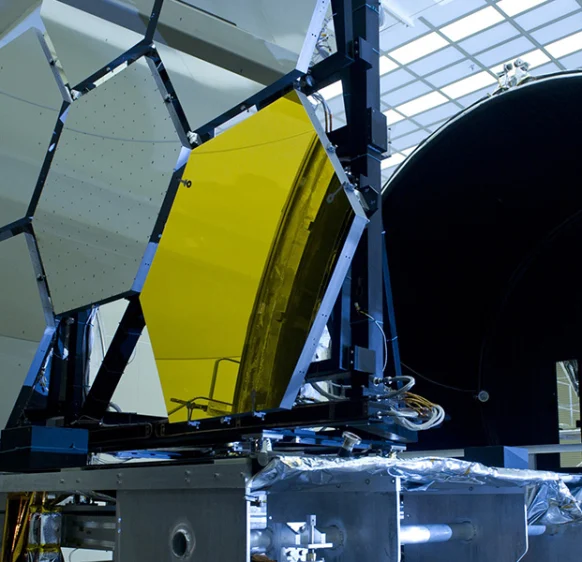
Optics
-
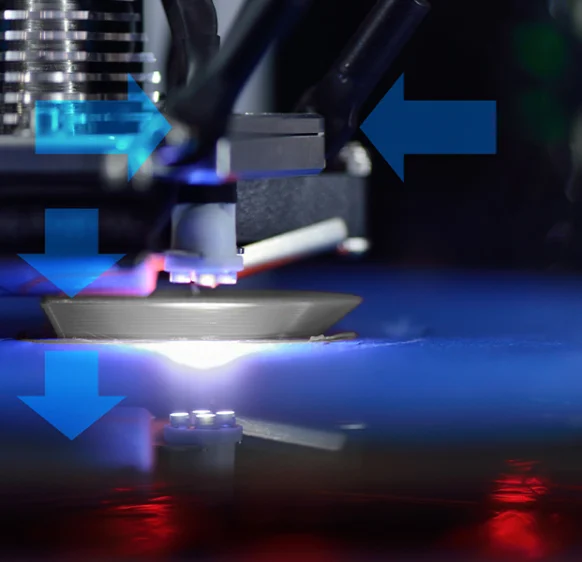
3D printing
-
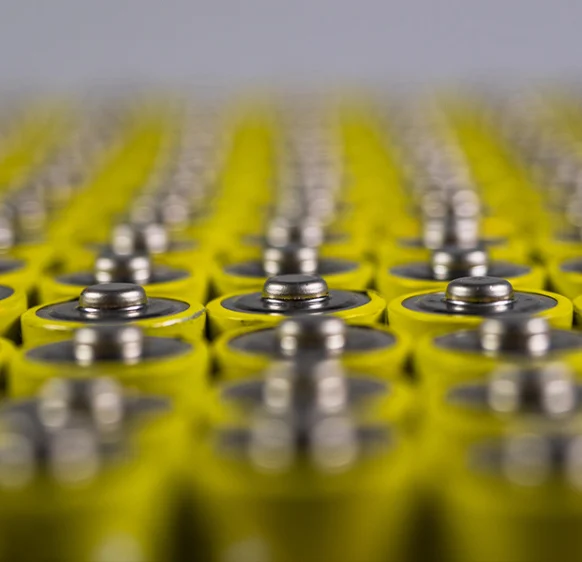
Battery manufacturing
Frequently asked questions
Answers to the most common questions about our products and services
The datasheet specifies 0.1 Hz to 8.4 kHz at the ±10% amplitude limit. The charge amplifier also affects the lower limit of the system.
Use it when there is room for the cable above the sensor, for example where side clearance is limited. Consider the side-connector Type 4383 when overhead clearance is limited.
Both versions have a nominal sensitivity of 31 pC/g at 159.2 Hz. Tolerance around nominal is ±2% for 4382 and ±15% for 4382-V.
The sensor is rated for −74°C to +250°C. Select the cable and adapters for the temperatures along the connection route.
The sensor produces a piezoelectric charge output. Use a charge input, or a charge converter followed by a voltage or IEPE input as required by the converter.
Get a quote or advice
Tell us what you need and an engineer will come back to you.
Request a quote for this product